

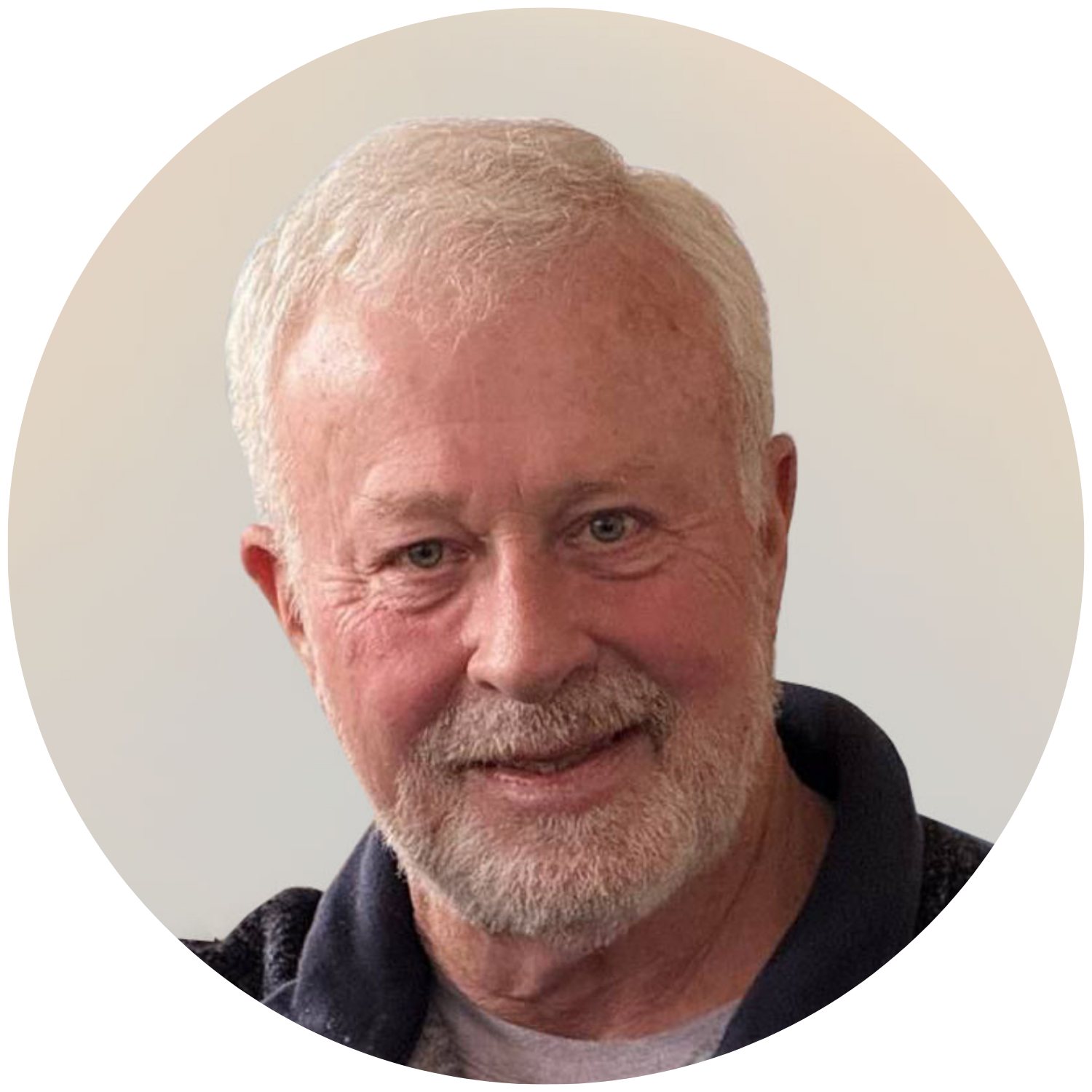
General David D. McKiernan USA (Ret.) is former Commander of the International Security Assistance Force (ISAF) (coalition of 42-nations) and United States Forces-Afghanistan (USFOR-A). Prior to that, he served as Commander of the Coalition Forces Land Component Command (CFLCC), United States Central Combatant Command during Operation “Iraqi Freedom,” making him the most experienced living American combat commander at the operational level having successfully led over 160,000 soldiers and Marines in the attack on Baghdad in 2003.
During his 37-year military career, General McKiernan held numerous other command and staff positions, including Commander of the Army Component Command, United States Central Combatant Command (ARCENT); Commander of the United States Army in Europe; and Commanding General, 1st Cavalry Division. He holds a Bachelor of Arts in History from the College of William & Mary, a Masters in Public Administration from Shippensburg University and a Master of Strategic Studies from the U.S. Army War College. He was commissioned into active duty upon completion of the Reserve Officers’ Training Corps program.
General McKiernan has visited Ukraine multiple times since the 2022 invasion holding seminars on leadership at Kyiv Mohila Business School’s Strategic Leadership Programme, Odessa Military Institute, Zhitomir Air Assault Command Training Center and to the General Staff of Ukraine.
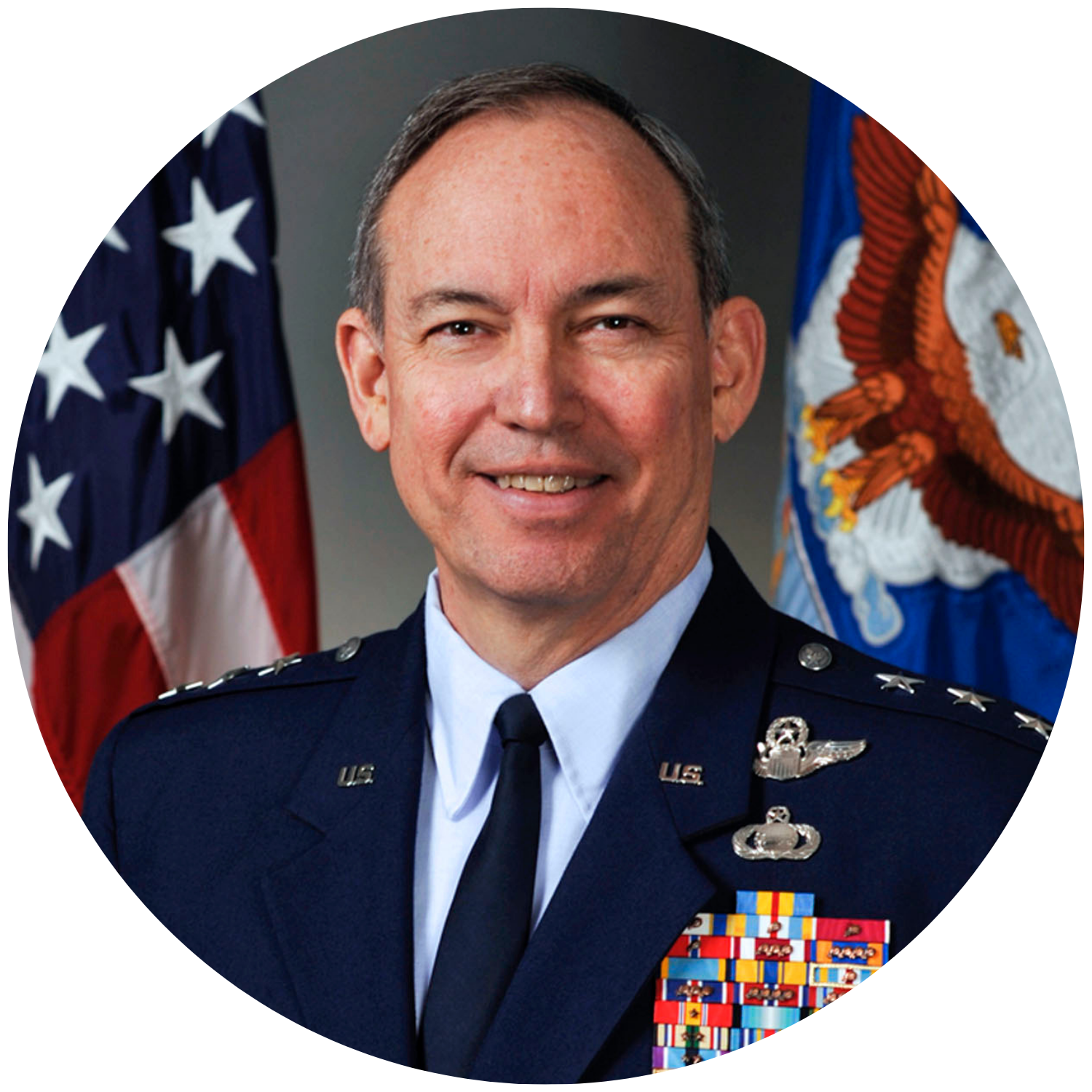
David A. Deptula is the Dean of the Mitchell Institute for Aerospace Power Studies and a senior scholar at the U.S. Air Force Academy’s Institute for Future Conflict. He is one of the world’s foremost airpower experts. Featured in the book, Airpower Pioneers: From Billy Mitchell to Dave Deptula, he has accomplished several “firsts” in the command, planning, and execution of aerospace power. He was the principal attack planner for the Desert Storm air campaign, commander of no-fly zone operations over Iraq, and orchestrated air operations over Afghanistan in 2001. He was the air commander for the South Asia tsunami relief effort, and in 2006 for the entire Pacific Command. He has twice been a Combined/Joint Task Force Commander, served on two congressional commissions determining America’s future defense, and was the first U.S. Air Force chief of intelligence, surveillance, and reconnaissance (ISR) where he transformed military ISR and drone enterprises. He has piloted more than 3,000 hours (400 in combat) to include multiple operational fighter commands in the F-15.
General Deptula has been cited as having “… fostered the most significant change in the conduct of aerial warfare since Billy Mitchell…Deptula’s framework influenced the successful air campaigns in Operations Allied Force, Iraqi Freedom, and Enduring Freedom. Today, joint targeting cells and Air Force doctrine reflect Deptula’s theory of airpower and the changing nature of warfare.”
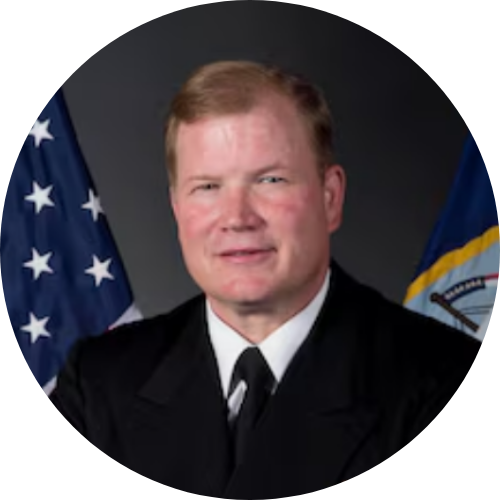
Rear Admiral Mark Montgomery, USN (Ret.) serves as senior director of the Center on Cyber and Technology Innovation, where he leads FDD’s efforts to advance U.S. prosperity and security through technology innovation while countering cyber threats that seek to diminish them. He also directs CSC 2.0, an initiative that works to implement the recommendations of the congressionally mandated Cyberspace Solarium Commission, where he served as executive director. Previously, RADM Montgomery served as policy director for the Senate Armed Services Committee under the leadership of Senator John S. McCain, coordinating policy efforts on national security strategy, capabilities and requirements, and cyber policy.
RADM Montgomery served for 32 years in the U.S. Navy as a nuclear-trained surface warfare officer, retiring as a rear admiral in 2017. His flag officer assignments included director of operations (J3) at U. S. Pacific Command; commander of Carrier Strike Group 5, embarked on the USS George Washington, stationed in Japan; and deputy director for plans, policy and strategy (J5) at U. S. European Command. He was assigned to the National Security Council from 1998 to 2000, serving as director for transnational threats. He has graduate degrees from the University of Pennsylvania and the University of Oxford and completed the U.S. Navy’s nuclear power training program.
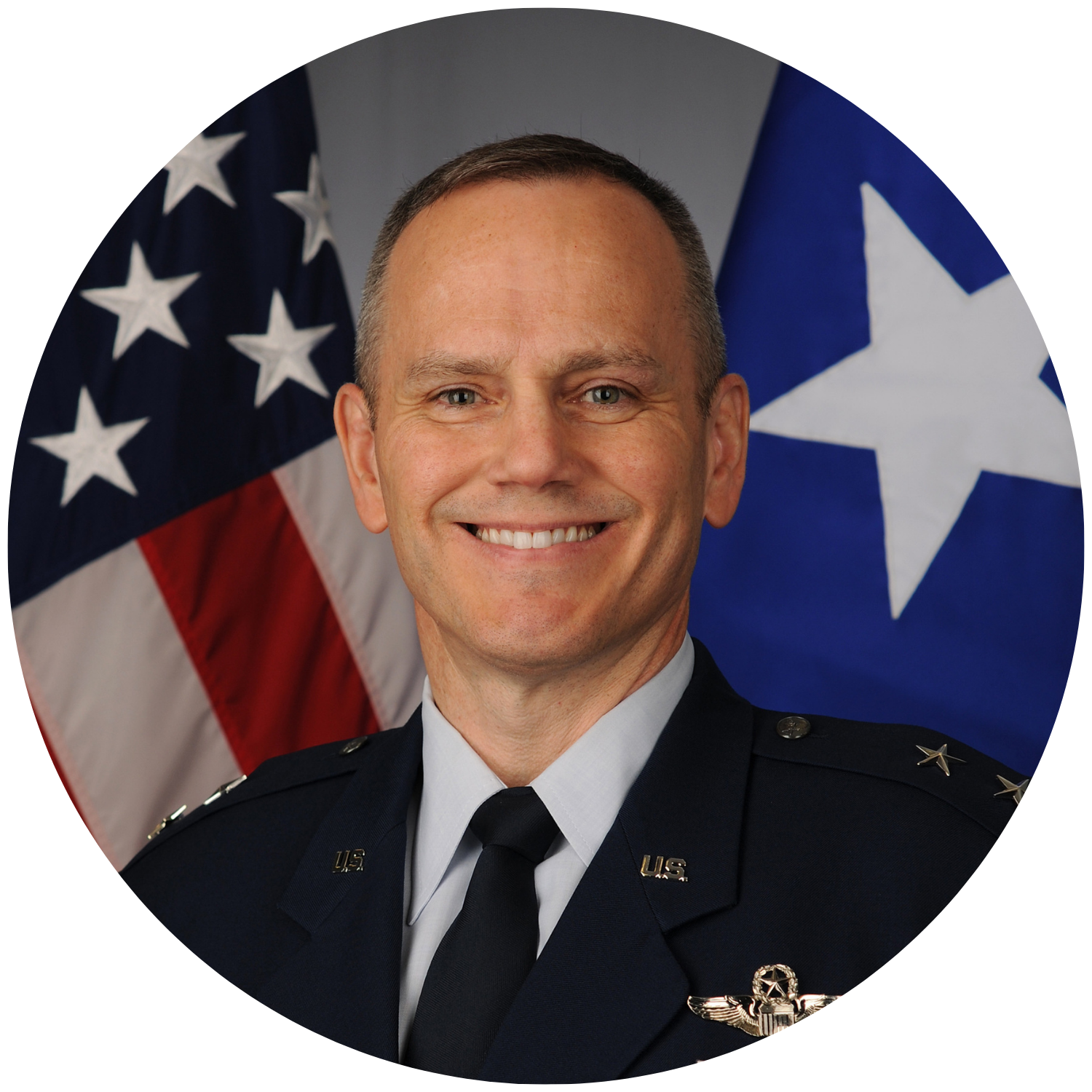
Charles S. Corcoran recently retired as the Assistant Deputy Chief of Staff, Operations, Headquarters U.S. Air Force, the Pentagon, Arlington, Virginia. He was responsible to the Secretary of the Air Force and the Chief of Staff for formulating policy supporting air, irregular warfare, counterproliferation, homeland security, weather and cyber operations. Maj. Gen. Corcoran determined operational requirements, capabilities and training necessary to support national security objectives and military strategy.
Maj. Gen. Corcoran earned his commission from the U.S. Air Force Academy in 1992. He has commanded the 525th Fighter Squadron, the 325th Operations Group, the 3rd Wing and the 380th Air Expeditionary Wing. He has served as the Executive Assistant to the Vice Chief of Staff of the Air Force and in the Secretary of the Air Force and Chief of Staff of the Air Force Executive Action Group. He was also in the headquarters staff of Air Forces Central Command, the North Atlantic Treaty Organization’s Allied Air Command, U.S. Air Forces in Europe and Air Forces Africa. Prior to his current position, Maj. Gen. Corcoran was the Commander, U.S. Air Force Warfare Center, Nellis Air Force Base, Nevada.
He is a graduate of the U.S. Air Force Weapons School and a command pilot with more than 3,200 flying hours, including more than 440 combat hours, primarily in the F-22 Raptor and F-15 Eagle.
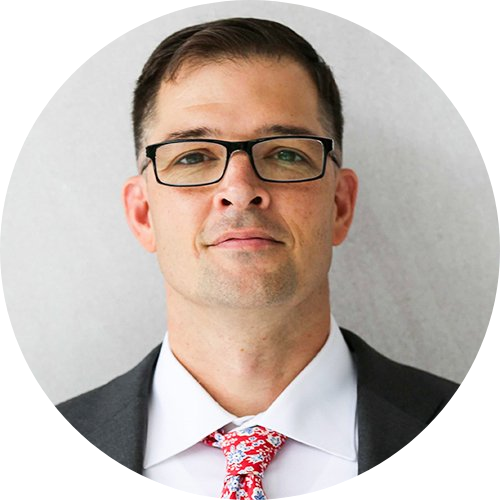
Dr. Benjamin M. Jensen holds a dual appointment as the Frank E. Petersen Chair of Emerging Technology and a Professor of Strategic Studies in the School of Advanced Warfighting at the Marine Corps University School of Advanced Warfighting (SAW) and as a Scholar-in-Residence at American University, School of International Service. At SAW he runs the Future War Research Program and directs the Changing Character of Conflict (3C) course. He previously founded the Gray Scholars Program at Marine Corps University, Command and Staff College and served as the inaugural Donald Bren Chair, helping establish the CMC Strategist Program. In 2017, Dr. Jensen received a Commandant of the Marine Corps Innovation Award. He has been a senior fellow at the Atlantic Council since 2016. He is an alumnus of the American Academy for Strategic Education (2014), Bridging the Gap Initiative (2013), and Merrill Center for Strategic Education Basin Harbor Workshop (2012).
Dr. Jensen has an extensive track record supporting the US Congress, the US Department of Defense, NATO, US Department of State (DOS), and USAID primarily with war gaming, red teaming, and alternative analysis. In 2019-2010, he served as the Senior Research Director and Lead Author for the U.S. Cyberspace Solarium Commission. During that same time period, he developed new forecasting and assessment frameworks for the Economic Organizational of West Africa States (ECOWAS) in support of USAID and DOS initiatives. He has advised DARPA, the Russia Strategic Initiative (SMA), Strategic Multilayered Assessment (SMA) effort on the Joint Staff, and Office of Net Assessment. Dr. Jensen publishes widely on the changing character of political violence and strategy. He has written opinion pieces on conflict and strategy for the Washington Post, New York Times, Financial Times, Washington Times, USA Today, U.S. News and World Report, Philadelphia Inquirer, Al-Hayat and the Daily Star.
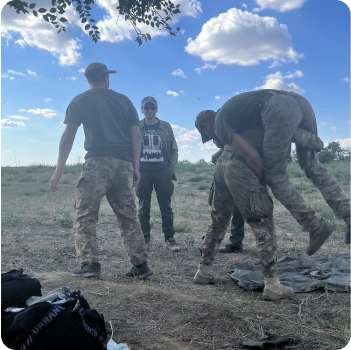
We are increasing the sustainable capacity of Ukraine by providing critical training and humanitarian services.
Learn more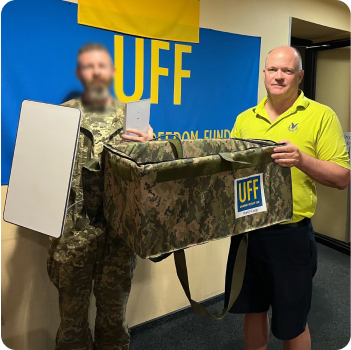
The UFF will apply your funds to the most pressing campaigns and highly dynamic issues faced by Ukrainian defenders and citizens.
Learn more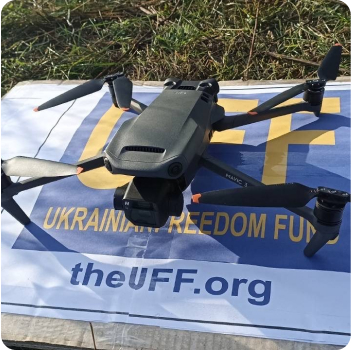
Allow Ukraine to see beyond the horizon for search and rescue, risk assessment, and damage survey.
Learn more#StandWithUkraine
#StandWithUkraine
#SupportUkraine
